
LVP vs Ceramic Tile Floors: What’s Best for Your Home in Southwest Florida?
LVP vs Ceramic Tile Floors your home in Southwest Florida? Compare durability, comfort, maintenance and style to choose the best flooring for each room.
- LVP vs Ceramic Tile Floors: What’s Best for Your Home in Southwest Florida?
- Why your flooring choice matters so much in Southwest Florida
- What is LVP flooring and what is ceramic tile?
- LVP vs ceramic: quick comparison overview
- Durability and resistance in Southwest Florida’s climate
- Comfort and style for your home
- Installation and maintenance
- Where LVP works best and where ceramic is the better option
- When should you call a professional in Southwest Florida?
- Conclusion: LVP or ceramic tile?
- Frequently asked questions about LVP and ceramic (FAQs)
Choosing the right flooring for your home is not only about looks. In Southwest Florida, the climate, humidity and daily use of each room make this decision especially important. Two of the most popular options today are LVP (Luxury Vinyl Plank) and ceramic tile.
In this article, we’ll compare both so you can understand which one works better for each area of your home. And if you’d like expert help, Yentor LLC – Renovation Solutions can guide you and handle the entire installation for you in Southwest Florida.
Why your flooring choice matters so much in Southwest Florida
In Southwest Florida we constantly deal with:
- High humidity.
- Frequent rain and storm season.
- Sand, dirt and water coming in from outside.
All of that affects your floors. A floor that is not well suited to the local conditions can:
- Lift, warp or crack over time.
- Stain and look old very quickly.
- Become slippery or uncomfortable to walk on.
That’s why choosing between LVP and ceramic tile is not just an aesthetic decision. It’s also about comfort, safety and long-term durability.
What is LVP flooring and what is ceramic tile?
Let’s imagine you’re standing in a flooring store, looking at two displays side by side.
LVP (Luxury Vinyl Plank) explained in simple terms
LVP comes in planks that look very similar to wood or sometimes stone, but they are made from high-performance vinyl.
On the shelf, you would see:
- Long planks, similar to wood boards.
- Different tones: gray, honey, natural wood, etc.
- Matte or slightly satin finishes.
Key features:
- Excellent water resistance (many products are 100% waterproof).
- Warmer and softer underfoot than ceramic tile.
- Quieter when walking compared to ceramics.
Ceramic tile: the classic choice
Ceramic tile comes in rigid tiles, which can be smooth, matte, glossy or textured.
Visually, you’ll see:
- Square or rectangular tiles.
- Very common in bathrooms, kitchens and laundry rooms.
- Finishes that can be smooth, rustic, or stone-like.
Key features:
- Extremely good at handling water and moisture.
- Great for areas that get wet frequently.
- Cooler and harder to the touch.
LVP vs ceramic: quick comparison overview
Here’s a quick “mental table” to compare both:
- Water resistance
- LVP: Very good, especially waterproof models.
- Ceramic tile: Excellent, ideal for wet zones.
- Comfort underfoot
- LVP: Softer, warmer, less noisy.
- Ceramic: Harder and usually colder.
- Installation
- LVP: Often faster and less invasive.
- Ceramic: Requires more prep work, mortar, cutting and time.
- Maintenance
- Both: Easy to clean with the right products.
- Style
- LVP: Very realistic wood-look, modern feel.
- Ceramic: Huge variety; perfect for classic, rustic or luxury looks.
Durability and resistance in Southwest Florida’s climate
Humidity, temperature changes and water
Humidity is part of everyday life in Southwest Florida, which means your floors need to handle it well.
- LVP:
- Many LVP products are waterproof and perform very well in living rooms, bedrooms, hallways and even kitchens.
- It’s important to choose a quality product and ensure proper installation to keep water from getting underneath through the joints.
- Ceramic tile:
- Handles water, humidity and standing moisture extremely well.
- A great option for bathrooms, laundry rooms and some exterior or semi-exterior areas (if the tile is rated for that).
Scratches, impact and daily wear
- LVP:
- Stands up well to daily foot traffic, chairs, kids, pets and normal household activity.
- It can scratch if heavy furniture is dragged without pads, but overall it’s very durable for residential use.
- Ceramic tile:
- Very resistant to wear and heavy traffic.
- However, a strong impact (like a heavy tool or object) can crack a tile.
Comfort and style for your home
How each floor feels under your feet
Think about getting out of bed in the morning and walking barefoot across the floor:
- LVP:
- Feels warmer and more comfortable underfoot.
- Transfers less cold from the subfloor.
- Can be easier on knees and back if you spend a lot of time standing.
- Ceramic tile:
- Usually feels colder and harder.
- On very hot days, that cool feeling can be nice, but some people find it uncomfortable first thing in the morning.
Designs, colors and final look
- LVP:
- Perfect if you love the look of real wood but want something more practical for Southwest Florida’s climate.
- Many options with realistic grain, texture and color variations.
- Ceramic tile:
- Comes in an enormous variety: stone look, polished concrete, marble-look, geometric patterns, Mediterranean styles and more.
- Works very well if you want a classic, rustic or high-end look, especially in bathrooms and kitchens.
Installation and maintenance
Installing LVP in an occupied home
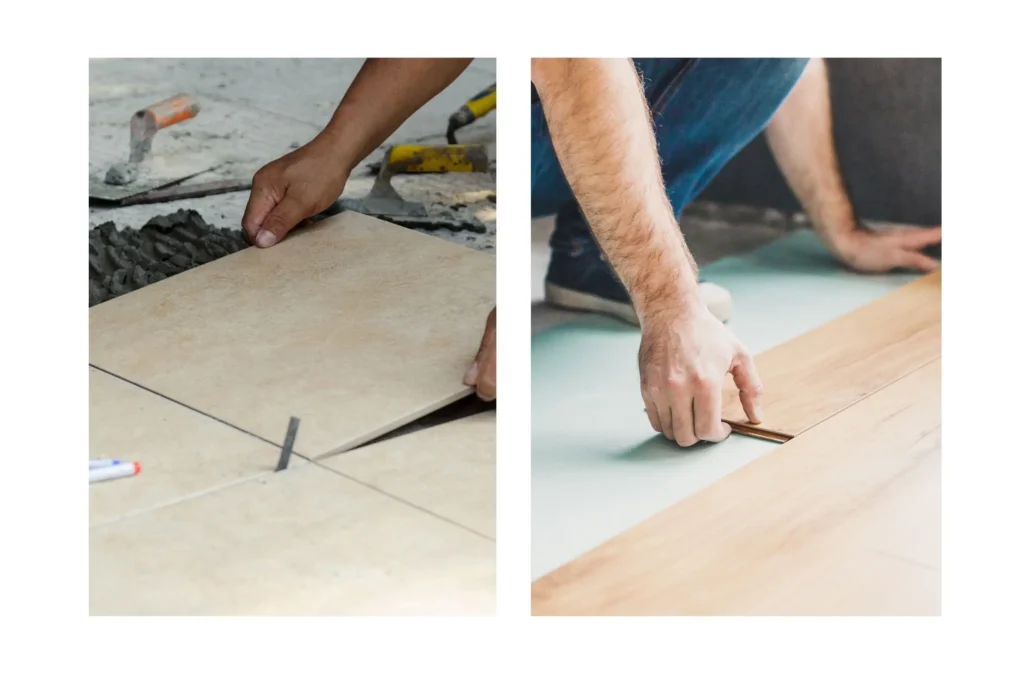
Picture a professional laying plank after plank, like assembling a long, neat puzzle:
- Often can be installed over existing floors (if they’re flat, solid and in good condition).
- Usually less dust and noise compared to a full tile job.
- In many cases, installation is faster and less disruptive for families who are living in the home.
At Yentor LLC, we can inspect your current floors and let you know if they are suitable for LVP installation or if some prep work is needed first.
Installing ceramic tile: what to expect
Here you’d see:
- Tile cutting with specialized tools.
- Mortar mixing, leveling, grouting and detailed cleaning.
Tile installation usually requires:
- More prep work and time.
- Good surface leveling to prevent uneven tiles.
- Keeping the area clear while work is being done.
Day-to-day cleaning and care
LVP:
- Clean with a soft vacuum or broom and a damp mop.
- Use cleaners recommended for vinyl and avoid very harsh chemicals.
Ceramic tile:
- Can be cleaned with most common hard-floor cleaners and a mop.
- Pay attention to the grout lines, which can collect dirt over time and may need deeper cleaning occasionally.
Where LVP works best and where ceramic is the better option
Recommended areas for LVP
LVP is especially good in:
- Living rooms and family rooms: warm and cozy look.
- Bedrooms: comfortable for bare feet.
- Hallways and common areas: durable and quiet.
- Home offices: reduces walking noise and looks professional.
Recommended areas for ceramic tile
Ceramic tile shines in:
- Bathrooms: especially in shower areas and around tubs.
- Kitchens: great where spills and splashes are frequent.
- Laundry rooms: where you have washers, utility sinks and drains.
- Some outdoor or semi-outdoor spaces, if the tile is slip-resistant and rated for exterior use.
A very popular approach in Southwest Florida is:
- LVP in living areas and bedrooms,
- Ceramic tile in bathrooms, laundry room and parts of the kitchen.
When should you call a professional in Southwest Florida?
Even though some LVP products are advertised as “DIY friendly”, in real homes:
- An uneven subfloor can cause noise, movement or gaps.
- A poor installation in humid areas can allow water to get underneath.
With ceramic tile, professional installation is even more critical:
- Bad leveling can leave lips and edges you feel every time you walk.
- Poor grouting can lead to water infiltration and long-term damage.
If you’re in Southwest Florida and want to:
- Replace old floors with modern LVP.
- Renovate a bathroom with new tile.
- Combine LVP and ceramic strategically around your home.
👉 Contact Yentor LLC – Renovation Solutions. We can visit your home, evaluate your current floors and recommend the best flooring plan for your needs.
Conclusion: LVP or ceramic tile?
There’s no single answer that fits every home, but you can use these ideas as a guide:
- Choose LVP if you want:
- A warm, wood-look style.
- More comfort and quieter steps.
- A less invasive installation for most living spaces.
- Choose ceramic tile if you need:
- Maximum water resistance in very wet areas.
- A classic, timeless or luxury look in bathrooms and kitchens.
For many homes in Southwest Florida, the best solution is a smart combination of both. That’s where a professional team like Yentor LLC can help you design a plan that fits your lifestyle, budget and property.
Remember: at Yentor LLC, we are more than a service — a trusted partnership for your home or business.
Frequently asked questions about LVP and ceramic (FAQs)
1. Can I use LVP in bathrooms?
Yes, there are waterproof LVP products that work well in bathrooms. However, in the actual shower area where water hits the floor constantly, ceramic tile is usually the safer and more durable choice.
2. Is ceramic tile always colder than LVP?
Most of the time, yes. Ceramic transfers more cold from the subfloor, while LVP generally feels warmer and softer.
3. Can LVP be installed over existing ceramic tile?
In some cases, yes. The ceramic needs to be well-bonded, level and without loose or broken tiles. A professional should inspect the floor before making that decision.
4. Which option is better if I have pets?
Both can work very well. LVP is comfortable and can resist light scratching, and ceramic is very easy to clean. The best option depends on the area of the house and the style you prefer.
5. How do I know which flooring type is best for each room?
The best approach is to evaluate each room by: use, moisture level and style. If you’re in Southwest Florida, you can contact Yentor LLC for a personalized consultation and a no-obligation estimate.
- “If you’re in Southwest Florida and planning to upgrade your floors with LVP or ceramic tile, reach out to Yentor LLC – Renovation Solutions for a professional evaluation of your project.”
- “Call us at +1 (239) 571-2366 and let our team handle your residential or commercial flooring installation in Southwest Florida.”
- “Visit https://renovationsolutionsyentor.com/ and schedule your flooring, maintenance or renovation service today.”
- “At Yentor LLC, we are more than a service — a trusted partnership for the care and improvement of your property in Southwest Florida.”